
U'Crew Concrete installs grounding systems all throughout the nation. Ensure your electrical infrastructure is safe and reliable, protecting people and equipment.
Electrical systems must be safe before they can be powerful. Every substation, utility site, industrial facility, and commercial building depends on a hidden safety system that protects both equipment and people. That system is grounding.
Grounding connects electrical systems directly to the earth. It provides a safe path for excess electrical energy to travel into the ground instead of damaging equipment or creating dangerous conditions.
U'Crew installs grounding systems as part of its utility, concrete, and civil construction services nationwide. Their work helps support safe and reliable electrical infrastructure for substations, industrial facilities, and commercial projects across the country.
Grounding is one of the most important safety systems in modern electrical infrastructure. It creates a controlled path that directs unwanted electrical energy safely into the earth.
When a fault occurs, such as a short circuit, lightning strike, or power surge, electricity needs somewhere safe to go.
Without grounding, excess electrical energy can damage equipment, interrupt operations, or create serious safety hazards.
Grounding helps protect people, equipment, and entire electrical systems from these risks.
In many projects, grounding systems are installed below the surface and integrated directly into concrete foundations and utility infrastructure.
Grounding is critical for substations, industrial facilities, utility infrastructure, and commercial construction projects.
Concrete foundations, transformer pads, breaker pads, and electrical structures often include grounding components built directly into the project.
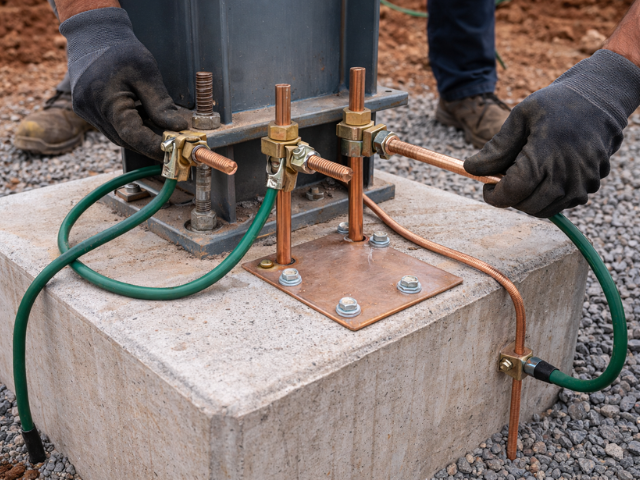
These systems may include copper conductors, grounding rods, bonding systems, and electrical connection points.
Without proper grounding, even well built electrical systems can face serious operational and safety problems.
Grounding helps reduce the risk of electrical shock, equipment failure, fires, and system interruptions.
U'Crew installs grounding systems designed to support safe and dependable electrical infrastructure nationwide.
Grounding systems must be designed according to site conditions and project requirements.
Soil conductivity, moisture levels, utility loads, and environmental conditions all affect grounding performance.
U'Crew brings nationwide construction experience to these projects. Their crews understand how different site conditions influence grounding system installation and long term reliability.
This experience becomes especially important for utility infrastructure and substation construction where grounding performance is critical.
Proper planning and installation help ensure electrical systems operate safely under demanding conditions.
Installing grounding systems requires coordination, planning, and careful integration with concrete and utility construction.
Every grounding system begins with a layout plan. Engineers determine the placement of grounding conductors, rods, and connection points throughout the site.
Crews review the project drawings and prepare the site for installation.
This planning stage helps ensure the grounding system meets safety requirements and supports the electrical infrastructure correctly.
Grounding conductors are typically made from copper because of its excellent electrical conductivity.
These conductors are placed in trenches, beneath slabs, or embedded directly within concrete structures.
The conductors create a network that connects electrical systems safely to the earth.
U'Crew installs these grounding systems during foundation and civil construction so they become integrated directly into the infrastructure itself.
Ground rods are driven deep into the earth to create a direct electrical connection with the soil.
These rods are connected to the grounding conductors throughout the site.
The number, depth, and placement of ground rods depend on site conditions and project specifications.
Proper installation helps ensure electrical fault currents can travel safely into the ground when needed.
Concrete foundations and structural systems often become part of the grounding network itself.
Grounding conductors may be connected directly to reinforcing steel within concrete foundations and slabs.
This method increases the grounding surface area and improves electrical dissipation into the earth.
It is commonly used in substations, industrial sites, and utility infrastructure projects.
Electrical substations depend heavily on grounding systems for both operational safety and equipment protection.
These facilities handle high voltage electricity and must be designed to manage electrical faults safely.
Grounding systems help direct dangerous fault currents safely into the earth while protecting workers and utility equipment.
U'Crew installs grounding systems for substations and utility infrastructure projects nationwide.
Their work supports transformer pads, breaker pads, control buildings, conduit systems, and utility structures that rely on safe electrical grounding.
Grounding systems are also essential in commercial and industrial construction.
Office buildings, retail facilities, service centers, and commercial developments all depend on grounding systems to protect electrical infrastructure.
Lighting systems, HVAC equipment, communication systems, and electrical panels all rely on safe grounding connections.
Grounding helps protect these systems from power surges and electrical faults.
Industrial sites often contain large machinery and high power electrical systems.
These environments place significant demands on electrical infrastructure.
Grounding systems help protect machinery, electrical controls, and operational systems from dangerous electrical conditions.
Concrete foundations and grounding systems work together to support safe industrial operations.
Imagine a new utility substation being constructed to support a growing industrial and commercial development.
Before transformers and electrical systems can be installed, grounding infrastructure must first be placed throughout the site.
U'Crew crews begin by installing copper grounding conductors across the substation area. Ground rods are driven deep into the earth and connected throughout the grounding network.
Conductors are tied directly into concrete foundations and structural systems during the construction process.
Once complete, the grounding system provides a safe path for electrical fault currents while helping protect the equipment and personnel operating within the facility.
Grounding systems are designed to remain operational for many years.
Once installed, these systems are often buried beneath foundations, slabs, and infrastructure where they are not easily accessible.
Because of this, proper installation is extremely important.
U'Crew focuses on accurate placement, durable materials, and dependable connections throughout the installation process.
These systems must continue functioning through changing weather conditions, moisture levels, and daily operational demands.
Grounding systems may not be visible once a project is complete, yet they play a major role in supporting modern electrical infrastructure.
They quietly protect people, buildings, substations, utility systems, and industrial operations every day.
U'Crew contributes to these projects by installing grounding systems designed for long term safety and electrical reliability nationwide.
Their work helps support the infrastructure that powers homes, businesses, utilities, and industrial systems across the country.
Most people never see the grounding systems beneath substations, buildings, and electrical infrastructure.
These systems remain hidden below the surface quietly performing one of the most important safety functions in modern construction.
When electrical faults occur, grounding provides a safe path for energy to move harmlessly into the earth.
Across the nation, grounding systems help support safe, reliable, and dependable electrical infrastructure that communities and industries rely on every day.