
U'Crew Concrete provides expert conduit installation nation wide. We secure and organize electrical systems for reliable, long-term commercial and utility infrastructure.
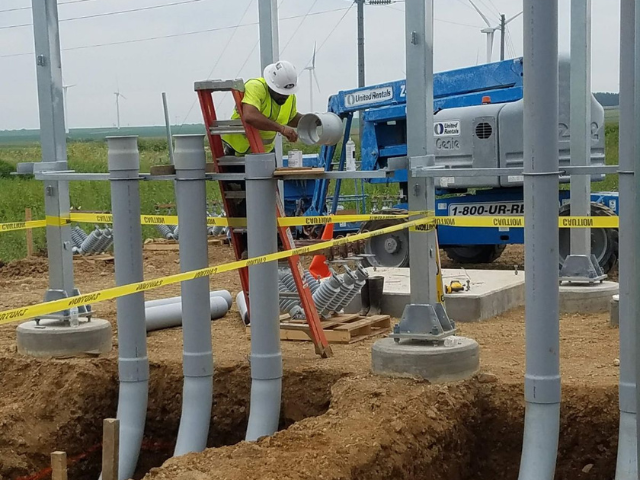
Every modern building and utility system depends on protected electrical pathways. Power cables, communication lines, and control wiring all move through a property beneath the surface and inside structural systems. These pathways must remain organized, protected, and reliable for long term operation.
That protection comes from conduit installation. Conduit systems provide secure pathways that shield wiring from damage while helping organize electrical infrastructure.
U'Crew installs conduit systems as part of its utility, concrete, and civil construction services nationwide. Their work helps support safe and dependable electrical systems for substations, industrial facilities, commercial developments, and infrastructure projects across the country.
Conduit installation involves placing protective piping systems that house electrical wiring and communication cables.
These conduits may be made from PVC, steel, or other durable materials designed for underground or structural use.
The conduit acts as a protective sleeve around the wiring. It helps shield cables from moisture, soil pressure, weather conditions, and physical damage.
Conduit systems also help organize electrical infrastructure by creating defined pathways for wiring instead of leaving cables exposed or loosely buried underground.
This organization helps support safer operation, easier maintenance, and future system upgrades.
Electrical systems are one of the most important parts of modern construction. Buildings, substations, industrial sites, and infrastructure projects all rely on protected electrical pathways to operate safely.
Without proper conduit installation, wiring may become damaged over time due to soil movement, moisture, weather exposure, or heavy equipment activity.
Conduit systems help reduce these risks by protecting the wiring beneath the surface and within concrete structures.
Properly installed conduit also helps reduce the risk of electrical faults and system interruptions.
Because of this, conduit installation remains a critical part of both utility and commercial construction projects.
Construction projects across the country face different environmental conditions and infrastructure requirements.
Soil movement, drainage patterns, freezing temperatures, heat exposure, and utility demands all affect underground electrical systems.
U'Crew brings nationwide construction experience to conduit installation projects. Their crews understand how to install conduit systems that perform reliably in a wide range of environments.
This experience becomes especially important in substations, utility facilities, industrial sites, and commercial developments where electrical systems support critical operations.
Careful planning and installation help ensure conduit systems remain dependable for many years.
Conduit installation requires coordination, planning, and accurate placement throughout every stage of construction.
Every project begins with a detailed layout plan. Engineers and contractors determine where conduit systems need to run and how they will connect to electrical equipment and infrastructure.
Crews mark the conduit pathways across the site to ensure the installation matches the construction plans.
Accurate layout work helps prevent conflicts with foundations, utility systems, and structural components.
Proper alignment is important because conduit systems must connect correctly with equipment pads, substations, control buildings, and electrical systems.
Once the layout is complete, crews begin trenching and excavation work.
Trenches are dug to the required depth for the conduit system. The depth depends on project specifications, utility requirements, and environmental conditions.
Underground conduit must be placed deep enough to protect it from damage and long term exposure.
The trench is then prepared to create a stable base for the conduit installation.
After trench preparation is complete, conduit sections are placed carefully into position.
Each section is connected to create a continuous pathway for electrical wiring and communication systems.
Crews ensure the conduit follows the planned route while maintaining proper alignment throughout the installation.
Bends and directional changes are installed carefully to support smooth cable installation later.
Proper conduit placement helps protect wiring and support long term electrical performance.
Once the conduit system is installed, it is secured within the trench before backfilling begins.
Backfilling must be handled carefully to avoid damaging the conduit or shifting its alignment.
Soil and backfill materials are compacted to stabilize the ground around the conduit system.
This process helps protect the conduit from movement and external stress over time.
After backfilling is complete, the conduit system is ready for electrical wiring installation.
Conduit systems are often integrated directly into concrete foundations, slabs, walls, and equipment pads.
U'Crew coordinates conduit installation with concrete construction so the systems can be embedded before the concrete is poured.
Once the concrete cures, the conduit becomes protected within the structure itself.
This approach is commonly used in substations, utility projects, industrial facilities, and commercial developments where long term durability is important.
Embedding conduit within concrete helps provide additional protection while maintaining organized electrical pathways.
Conduit installation plays an important role in utility and electrical infrastructure projects nationwide.
Electrical substations rely on conduit systems to connect transformers, breakers, control buildings, and utility equipment.
Conduit protects wiring from environmental exposure while supporting safe electrical operation.
U'Crew installs conduit systems that help support these critical utility facilities.
Office buildings, retail centers, service facilities, and commercial developments all require organized electrical systems.
Conduit installation helps guide electrical wiring throughout the property while supporting lighting systems, communication infrastructure, and power distribution.
Accurate installation helps ensure these systems operate reliably.
Industrial sites often contain large electrical systems and high power equipment.
Conduit systems help manage these complex wiring networks while protecting cables from environmental stress and operational hazards.
Concrete foundations and conduit systems work together to create stable and protected electrical infrastructure.
Imagine a new commercial and utility development preparing for construction.
Before electrical systems can operate, underground conduit pathways must first be installed across the site.
U'Crew crews begin by laying out conduit routes that connect buildings, utility systems, equipment pads, and electrical infrastructure.
Trenches are excavated and prepared carefully before conduit sections are placed into position.
In some areas, conduit systems are embedded directly within concrete slabs and structural foundations.
Once backfilling and concrete work are complete, the site is ready for electrical wiring installation.
The finished conduit system provides organized and protected pathways that support the entire electrical infrastructure.
Underground electrical systems must withstand changing environmental conditions for many years.
Heat, freezing temperatures, soil movement, moisture, and heavy equipment all place stress on infrastructure systems.
Conduit installation must account for these conditions through proper depth, careful placement, reinforcement, and stable backfilling.
Concrete structures provide additional protection when conduit is integrated directly into foundations and slabs.
These details help ensure long term performance and reliability.
Conduit installation may remain hidden beneath the surface once construction is complete, yet it plays a major role in supporting modern infrastructure.
Protected electrical pathways help keep power systems, communication networks, and utility infrastructure operating safely and efficiently.
U'Crew contributes to these projects by installing conduit systems designed for long term reliability nationwide.
Their work supports substations, industrial facilities, commercial developments, and infrastructure systems that communities and industries rely on every day.
Beneath every modern building, utility site, and infrastructure project are organized pathways carrying electrical power and communication systems.
These conduit systems quietly protect the wiring that supports modern life.
Across the nation, conduit installation helps create reliable electrical infrastructure that supports businesses, utility systems, industrial operations, and growing communities every day.