
Industrial oil containment walls. Reinforced concrete barriers for fuel storage, substations & spill control.
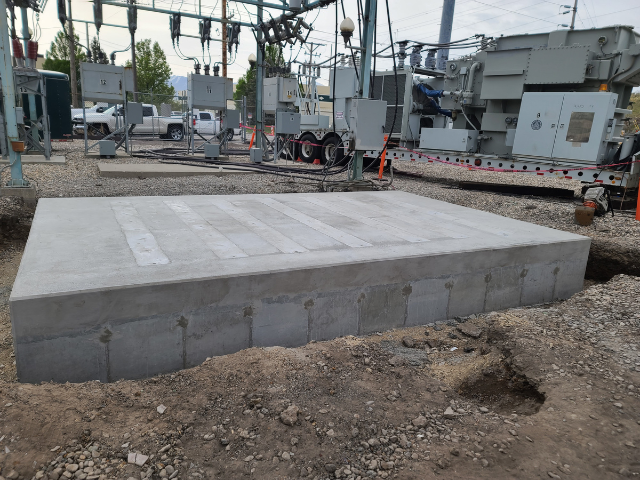
Industrial facilities depend on strong systems to manage safety and environmental protection. Sites that store fuel, oil, transformers, or industrial liquids must be prepared to contain spills and prevent contamination. One of the most important parts of that protection is a properly built containment structure.
Oil containment walls are reinforced concrete barriers designed to hold liquids within a controlled area. These structures help prevent spills from spreading while protecting surrounding equipment, soil, and infrastructure.
U'Crew installs oil containment walls for industrial, utility, and commercial projects across the nation. Their work supports facilities that require dependable containment systems built for long term durability and safety.
Oil containment walls are designed to control and contain liquid spills. They are commonly built around transformers, storage tanks, generators, fuel systems, and industrial equipment that store oil or hazardous liquids.
If a leak or equipment failure occurs, the containment structure keeps the liquid within a defined area. This helps reduce environmental damage and limits the spread of contamination.
Containment systems also help facilities meet safety standards and operational requirements.
Reinforced concrete containment walls provide the structural strength needed for these demanding environments.
Concrete is widely used for oil containment walls because of its strength and durability. When reinforced with steel, it can withstand liquid pressure, environmental stress, and long term exposure to industrial conditions.
Containment structures often operate outdoors year round. They must resist moisture, temperature changes, sunlight, wind, and heavy use.
Properly installed reinforced concrete creates a strong barrier that helps prevent spills from escaping the containment area.
Because of these advantages, reinforced concrete remains one of the most reliable materials for containment construction.
Industrial and utility infrastructure continues expanding across the country. Fuel storage systems, substations, industrial yards, and utility facilities all require containment systems capable of supporting safe operation.
Oil containment walls are commonly used around transformers, storage tanks, and industrial equipment where liquid control is necessary.
U'Crew supports these projects by installing reinforced concrete containment systems designed for long term performance in demanding environments.
Their work helps facilities maintain safety, compliance, and environmental protection nationwide.
The construction process begins with careful site preparation. The strength of the finished structure depends heavily on the stability of the ground beneath it.
Crews begin by grading the site where the containment wall will be installed. The ground must be level and shaped correctly to control liquid flow within the containment area.
Proper grading helps ensure that spills remain inside the containment zone instead of escaping the structure.
After grading is complete, the soil is compacted to create a strong and stable base beneath the concrete.
Compaction helps reduce the risk of shifting or settling over time.
Once the site is prepared, forms are installed to shape the walls and containment floor. These forms define the dimensions, layout, and height of the structure.
Reinforcement steel is then placed throughout the forms. Rebar grids and reinforcement cages increase structural strength and help the concrete resist cracking under pressure.
This reinforcement is especially important for oil containment walls that must safely hold liquid during spill events.
The concrete pouring stage requires precision and careful coordination. The mixture must be placed evenly to create a strong and consistent structure.
U'Crew crews ensure the concrete fills every section of the forms while surrounding the reinforcement steel completely.
Vibration tools help remove trapped air pockets that could weaken the structure.
The surface is then finished to create smooth walls and properly shaped edges that improve durability and support easier maintenance.
Once the concrete is poured, the curing process begins.
Concrete gains strength gradually during curing. Temperature and moisture both affect how the material hardens.
Different project environments create different curing challenges. Heat, freezing temperatures, wind exposure, and changing weather conditions all influence the curing process.
U'Crew crews monitor curing conditions carefully to ensure the containment walls develop full structural strength.
Proper curing helps reduce cracking and improves long term durability.
Once curing is complete, the containment structure is ready for operation.
Oil containment walls are designed to safely control liquid movement within the containment area.
The size and height of the walls are determined by the amount of liquid the structure may need to contain.
The containment area must be large enough to safely hold a spill without overflowing.
Proper sizing helps support environmental protection and operational safety.
Many containment systems include sloped floors and drainage features that help direct liquids toward designated collection areas.
This design helps simplify cleanup while preventing liquids from spreading beyond the containment structure.
Proper drainage planning also helps protect the integrity of the foundation over time.
Containment walls are often constructed around transformers, fuel tanks, generators, and industrial systems.
The layout must provide space for maintenance access while still creating a complete containment barrier.
Accurate construction helps ensure the containment system fits the equipment and site requirements properly.
Imagine an industrial facility installing new fuel storage systems and transformer equipment as part of an infrastructure expansion project.
Before the equipment can be placed into operation, reinforced containment structures must be installed to support environmental safety requirements.
U'Crew crews begin by grading and compacting the site. Forms are installed for the containment walls and floor, while reinforcement steel is placed throughout the structure.
Concrete is poured carefully to create durable walls and a sealed containment area.
After curing is complete, the facility has a reinforced containment system designed to manage spills safely and protect surrounding infrastructure.
Containment systems must withstand demanding environmental and operational conditions over many years.
Wind, moisture, temperature changes, sunlight, and heavy industrial use all place stress on the structure.
Reinforced concrete provides the durability needed for long term containment performance.
Proper installation, drainage planning, reinforcement, and curing all help ensure the walls remain stable and dependable over time.
Oil containment walls play an important role in protecting both infrastructure and the environment.
These structures help prevent spills from spreading while supporting safer industrial and utility operations.
Facilities that invest in reinforced containment systems demonstrate a commitment to operational safety and environmental responsibility.
U'Crew supports these efforts by installing concrete containment systems designed for industrial and utility infrastructure nationwide.
Most people never notice oil containment walls during everyday operations. They often sit behind transformers, storage systems, and industrial equipment quietly performing their role.
Yet these reinforced structures are essential for protecting equipment, land, and surrounding infrastructure.
Across the nation, oil containment walls help support industrial operations, utility facilities, and energy infrastructure by creating strong barriers designed for safety, durability, and long term protection.