
Durable concrete foundations for EV charging stations. U'Crew delivers reliable equipment pads, structural slabs & drainage.
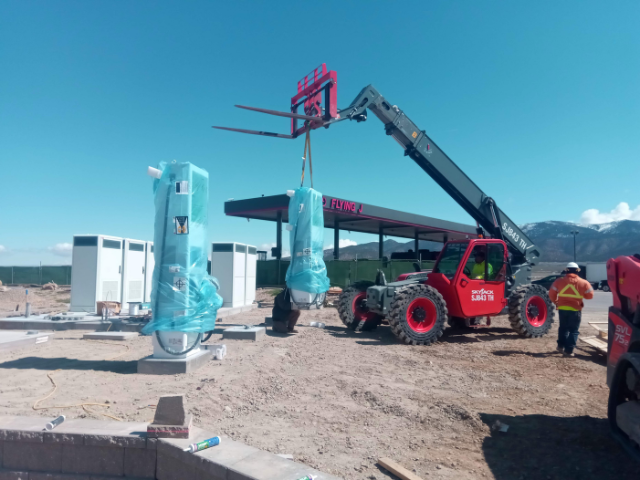
Electric vehicles are becoming more common across the United States. Drivers now expect to see charging stations at shopping centers, office buildings, hotels, travel stops, apartment complexes, and commercial developments. As this technology continues to expand, dependable construction plays an important role in supporting that growth.
Every EV Charging Station begins with a strong concrete foundation. Chargers, electrical cabinets, bollards, and support equipment all depend on stable concrete structures that can handle heavy use and changing weather conditions.
U'Crew helps prepare these sites by installing the concrete foundations and infrastructure systems that support EV charging technology nationwide.
Electric vehicles are no longer limited to large cities. Drivers across the country are choosing electric cars, trucks, and commercial vehicles for daily transportation and business operations.
Because of this shift, EV Charging Stations continue appearing in parking lots, gas stations, hotels, apartment complexes, office buildings, and commercial centers.
These charging locations allow drivers to recharge vehicles while shopping, working, traveling, or staying overnight.
Before any charger can be installed, the site must first be prepared with reinforced concrete foundations and supporting infrastructure. The charging equipment depends on those foundations to remain level, stable, and secure.
Concrete construction becomes one of the earliest and most important stages in EV charging station development.
EV Charging Stations involve more than simply installing electrical equipment. Chargers, mounting pedestals, protective barriers, and electrical cabinets all require structural support.
Concrete provides the strength and durability needed for these installations. It supports charging equipment while also helping protect underground electrical systems.
Concrete also helps organize parking spaces, traffic flow, and protective barriers around the charging area.
Because charging stations operate outdoors year round, the materials used must withstand changing weather conditions, vehicle traffic, and constant daily use.
Reinforced concrete performs well under these demanding conditions.
Construction projects across the country face different environmental and site conditions. Soil movement, moisture levels, drainage requirements, and weather exposure all influence long term performance.
U'Crew brings nationwide construction experience to EV Charging Station projects. Their crews understand how to prepare sites, install foundations, and create stable structures that support long term reliability.
This experience becomes especially important when installing foundations for electrical equipment that must remain level and secure over time.
Careful planning and preparation help prevent movement, cracking, and alignment issues that could affect charging equipment later.
Before concrete is poured, the site must be prepared carefully. Proper preparation helps ensure the finished foundation performs reliably for years.
The first step involves grading the area where the charging stations will be installed. Crews remove debris, adjust elevations, and create a level work surface.
Proper grading also supports drainage. Water must move away from electrical equipment to help reduce the risk of water damage or erosion.
Once the site is leveled, the soil is compacted to create a stable base beneath the concrete.
Forms are then installed to shape the concrete foundations, equipment pads, and parking surfaces. These forms define the size and layout of the charging station foundations.
Reinforcement steel is placed inside the forms to increase structural strength. This reinforcement helps the concrete handle vehicle traffic, equipment weight, and environmental stress.
Once preparation is complete, the site is ready for the concrete pour.
Concrete pouring requires careful coordination and attention to detail. The mixture must be placed evenly throughout the foundation area.
U'Crew crews spread and level the concrete while removing trapped air pockets that could weaken the structure.
Surface finishing tools help create smooth and level foundations. In EV Charging Station construction, precise leveling is important because charging equipment must sit straight for proper alignment and operation.
After finishing, the curing process begins.
Concrete gains strength over time as it cures. During this stage, temperature and moisture affect how the material hardens.
Different project locations create different curing conditions. Heat, cold weather, wind, and changing environments all require careful monitoring.
Protecting fresh concrete during curing helps ensure the foundation develops full structural strength.
Proper curing also helps reduce cracking and improves long term durability.
Once curing is complete, the site is ready for electrical contractors to install the charging equipment.
EV Charging Stations often include more than just the charging unit itself. Additional infrastructure is commonly installed to support electrical systems and site safety.
Many charging units are mounted directly onto reinforced concrete pads or pedestals. These foundations keep the equipment stable while protecting underground electrical connections.
Accurate placement helps ensure the chargers align correctly with parking spaces and access areas.
Charging stations often require electrical cabinets and power distribution systems. These components must sit on reinforced concrete foundations capable of supporting their weight and maintaining alignment.
Stable foundations help protect sensitive electrical equipment and support long term operation.
Many EV Charging Stations include steel bollards or protective barriers around the equipment. These structures help protect chargers from accidental vehicle impacts.
The bollards are anchored into reinforced concrete foundations that provide the strength needed to absorb force and protect the equipment.
Imagine a commercial shopping center preparing to install a new EV Charging Station area for customers and travelers.
Before chargers can be installed, the site must first be prepared with reinforced concrete foundations and equipment pads.
U'Crew crews begin by grading the parking lot area and preparing the soil. Forms are installed for charger foundations, electrical cabinets, and protective bollards. Reinforcement steel is added to strengthen the structure.
Concrete is poured carefully and finished to create level surfaces for the charging equipment.
After curing is complete, electrical contractors install the chargers and connect the systems.
Soon drivers can pull into the station, recharge their vehicles, and continue traveling with confidence.
Electric vehicles continue growing in popularity across the country. Businesses, cities, developers, and property owners are expanding charging infrastructure to support this shift.
Concrete construction plays an important role in that process. Strong foundations support charging equipment, protect electrical systems, and help organize safe parking areas.
U'Crew contributes to these projects by installing the concrete structures that make EV Charging Stations possible nationwide.
Their work helps support the growing infrastructure behind modern transportation systems.
Most drivers focus on the charging equipment they see above the ground. Yet beneath every charger is a carefully constructed concrete foundation supporting the entire system.
These foundations help protect electrical equipment, guide traffic flow, and keep charging systems stable through changing weather and daily use.
Across the nation, new EV Charging Stations continue appearing in commercial developments, travel centers, parking lots, and public infrastructure projects.
Beneath each one is a strong concrete foundation quietly supporting the future of transportation.