
U'Crew Concrete provides concrete piers nation wide for deep, lasting foundation stability. Anchor your residential, commercial, or industrial structure against shifting soil.
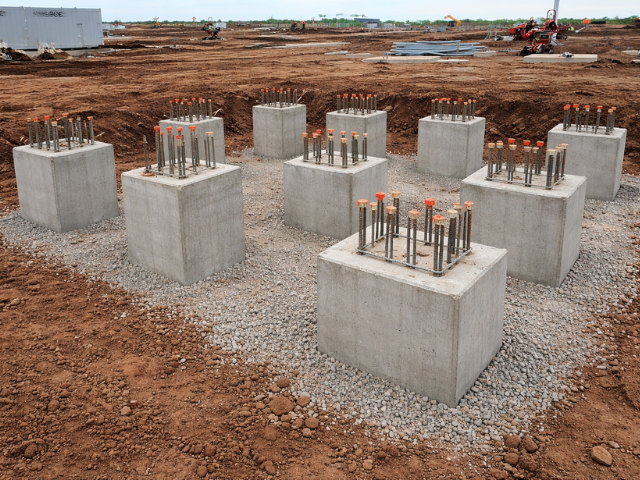
Strong structures begin below the surface. While most people focus on walls, roofing, and finishes, the real strength of a building often comes from the foundation system beneath it.
Concrete piers provide deep structural support that helps buildings remain level and stable over time. These reinforced concrete elements transfer the weight of a structure deep into stable soil below the surface.
U'Crew installs concrete piers for residential, commercial, industrial, and infrastructure projects across the nation. Their work helps support structures that require dependable long term stability and reinforced foundation systems.
Concrete piers act as deep anchors for buildings and infrastructure systems. Instead of relying only on surface soil, they extend downward into stronger and more stable ground conditions.
This allows the weight of the structure to be supported by deeper soil layers that are less affected by shifting, expansion, or erosion.
In areas where soil movement may create foundation problems, concrete piers provide additional stability.
They are often used when traditional slab foundations alone may not provide enough support.
Concrete piers help structures remain level and secure over time.
Soil conditions vary greatly across the country. Moisture changes, clay expansion, freezing temperatures, and shifting ground can all affect foundation performance.
Without proper support, foundations may crack, settle unevenly, or shift over time.
Concrete piers help reduce these risks by anchoring structures below unstable surface conditions.
This added support becomes especially important for large buildings, heavy equipment, and long term infrastructure projects.
U'Crew installs concrete piers designed to support structures in a wide range of environments and construction conditions nationwide.
Concrete piers are used in many types of construction where strength and long term stability are important.
Homeowners often use concrete piers during new home construction or foundation repair projects.
For example, a home built on shifting soil may eventually develop cracks or uneven settling. Concrete piers help stabilize the structure by transferring the load deeper into stable ground.
This added support helps protect the foundation and extend the life of the structure.
Commercial buildings often require stronger foundations because of their size and structural weight.
Office buildings, retail spaces, warehouses, and commercial facilities may all rely on pier systems to maintain long term stability.
Concrete piers provide the reinforced support needed for these larger structures.
Industrial facilities often contain heavy machinery and equipment that place significant stress on the ground beneath them.
Concrete piers help distribute these loads and maintain alignment within the structure.
Infrastructure and utility projects may also use piers to anchor critical systems and structural components.
Installing concrete piers involves several stages. Each step helps ensure the finished foundation performs reliably over time.
Every project begins with understanding the site conditions. Soil composition, structural loads, and foundation requirements all influence how the pier system will be designed.
U'Crew reviews project plans and determines the placement and depth required for each pier.
This planning stage helps ensure the finished system meets the structural demands of the project.
Once the layout is complete, crews begin creating the holes for the piers. These holes are drilled or excavated into the ground to the required depth.
The goal is to reach stable soil capable of supporting the structural load.
The depth of each pier may vary depending on site conditions and engineering requirements.
After the pier holes are prepared, reinforcement steel is installed inside each location. Rebar strengthens the concrete and improves its ability to resist stress and movement.
Forms may also be installed at the upper portion of the pier where it connects to the foundation system.
This step helps ensure the finished pier has the proper dimensions and structural strength.
Concrete is then poured into the pier holes, surrounding the reinforcement steel and filling the entire structure.
U'Crew crews ensure the concrete is placed evenly and free of trapped air pockets.
This process creates a solid and consistent structural foundation beneath the building.
Once poured, the concrete begins curing.
As the concrete cures, it gains strength gradually over time. Proper curing helps ensure the piers can support structural loads for many years.
After curing is complete, the tops of the piers are prepared for connection to the building foundation or structural system.
This completes the installation process and prepares the site for the next stage of construction.
Imagine a new commercial building being constructed on land with uneven soil conditions. Engineers determine that deep foundation support is needed to help prevent settling and structural movement.
U'Crew crews arrive to begin the project. The site is evaluated, and the locations for each pier are carefully marked.
Pier holes are drilled deep into stable soil beneath the surface. Reinforcement steel is installed, and concrete is poured carefully into each location.
After the concrete cures, the building foundation is connected to the pier system.
The finished structure now rests on a reinforced foundation designed for long term stability.
Concrete piers provide several important benefits for construction projects.
One major advantage is their ability to transfer structural loads into stable soil beneath the surface. This reduces the impact of shifting or expanding surface conditions.
Concrete piers also provide strong support for heavy structures and infrastructure systems.
They help distribute weight evenly while reducing long term foundation stress and movement.
In many projects, concrete piers help extend the life of the structure itself.
Construction projects must withstand changing environmental conditions over time.
Heat, moisture, freezing temperatures, and soil movement all place stress on foundations.
Concrete piers are designed to handle these conditions. Reinforced concrete provides strength and durability capable of supporting structures for decades.
Proper installation, reinforcement, and curing all contribute to long term performance.
Installing concrete piers requires knowledge of foundation systems, structural loads, and varying site conditions.
U'Crew brings nationwide construction experience to every project. Their crews understand how different soil conditions and environments affect foundation performance.
This experience helps ensure every pier system is installed accurately and built for long term structural support.
Concrete piers may not be visible once construction is complete, yet they play a major role in supporting buildings and infrastructure.
They provide the deep structural support needed to help foundations remain stable and secure over time.
Across the nation, concrete piers help support homes, businesses, industrial facilities, and infrastructure systems that people depend on every day.
Each pier is installed with precision, creating a stronger foundation for the structures built above it.