
Durable concrete breaker pads for electrical infrastructure. U'Crew delivers reliable foundations for substations across the nation.
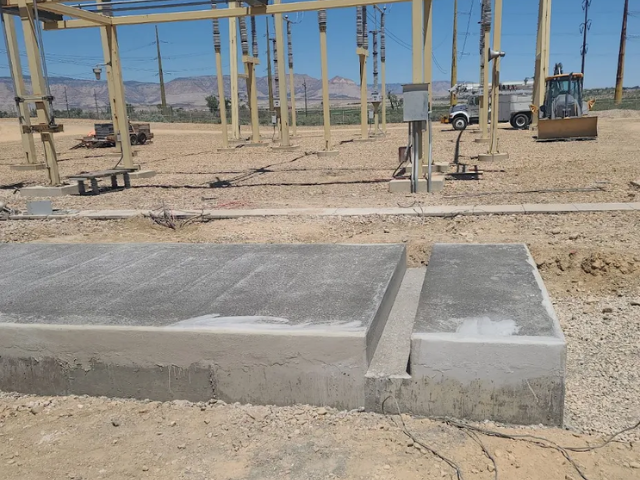
Electric power systems depend on strong infrastructure to operate safely and reliably. Substations, utility yards, and electrical facilities all contain equipment that must sit on stable foundations. One important part of that infrastructure is the breaker pad.
Breaker pads are reinforced concrete foundations designed to support electrical breakers and related utility equipment. These pads must remain level, durable, and properly aligned to support long term electrical performance.
U'Crew installs breaker pads for utility and infrastructure projects across the nation. Their work helps support the electrical systems that power homes, businesses, industrial facilities, and public infrastructure.
Electrical substations and power distribution sites contain many pieces of equipment. Circuit breakers are among the most important components within these systems.
A circuit breaker controls the flow of electricity through the grid. If a fault or overload occurs, the breaker interrupts the electrical flow to help protect equipment and maintain safety.
Breaker pads serve as the concrete foundation beneath these systems. The pad supports the weight of the equipment while helping maintain alignment within the electrical infrastructure.
These foundations also help protect underground wiring and conduit systems connected to the breaker equipment.
Without a properly installed breaker pad, electrical systems may shift or become misaligned over time.
Breaker pads must support significant weight while resisting environmental stress for many years.
Electrical breakers and utility equipment are often extremely heavy. Their foundations must remain stable through changing weather conditions and continuous operation.
Reinforced concrete provides the strength and durability needed for these environments. Steel reinforcement helps increase structural strength and reduce cracking.
Concrete also performs well in outdoor utility environments exposed to heat, moisture, wind, and temperature changes.
Because of these advantages, reinforced concrete remains one of the most dependable materials for breaker pad construction.
Electrical infrastructure continues expanding across the country. Utility providers, industrial facilities, and growing communities all rely on dependable substations and electrical systems.
These facilities require properly installed concrete foundations capable of supporting utility equipment safely and reliably.
U'Crew works with contractors, utility providers, and infrastructure teams to install breaker pads that support these systems nationwide.
Their experience in utility construction helps ensure foundations are built for long term structural performance.
Installing breaker pads begins with careful site preparation. The stability of the finished foundation depends heavily on the condition of the ground beneath it.
Crews begin by grading the area where the breaker pad will be installed. The site must be level and shaped properly to support drainage.
Water management is important around utility infrastructure. Water buildup near foundations can weaken soil and affect long term stability.
After grading is complete, the soil is compacted to create a strong and stable base.
Compaction removes air pockets and strengthens the ground beneath the concrete structure.
Once the ground is prepared, forms are installed to shape the breaker pad foundation. These forms define the dimensions and layout of the structure.
Steel reinforcement is then placed inside the forms. Rebar grids and reinforcement cages help strengthen the concrete and improve durability.
This reinforcement allows the breaker pad to support heavy equipment and resist long term environmental stress.
The concrete pouring stage requires coordination and precision. The mixture must be placed evenly throughout the forms to create consistent structural strength.
U'Crew crews carefully spread and level the concrete while removing trapped air pockets. This process helps the concrete settle tightly around the reinforcement steel.
The surface is then finished to create a level foundation ready for equipment installation.
Level surfaces are important because electrical breakers must align correctly with wiring systems and support structures.
Concrete does not reach full strength immediately after pouring. The curing process allows the material to harden gradually and develop structural integrity.
Temperature and moisture both influence how concrete cures. Hot weather, freezing conditions, and changing environments all require careful monitoring during this stage.
Crews monitor curing conditions closely to ensure the breaker pad develops the strength needed for long term performance.
Proper curing helps the structure resist cracking and maintain stability over time.
Once curing is complete, the pad is ready for electrical equipment installation.
Breaker pads support several important components within electrical facilities. Every piece of equipment must remain stable and properly aligned.
Circuit breakers are commonly mounted directly onto the reinforced concrete pad. Anchor bolts and mounting hardware secure the equipment to the structure.
The foundation helps distribute the weight of the breaker evenly across the ground.
This stability allows the breaker system to operate reliably when needed.
Breaker pads may also support steel frames, conduit systems, and utility support structures connected to the electrical equipment.
These systems rely on the concrete foundation to remain level and secure.
Accurate installation helps maintain alignment throughout the utility infrastructure.
Imagine a new electrical substation being built to support a growing industrial development. Before transformers and breakers can be installed, the site infrastructure must first be prepared.
U'Crew crews begin by grading and compacting the site. Forms are installed for the breaker pads, and reinforcement steel is placed throughout the structure.
Concrete is poured carefully and finished to create level equipment foundations.
After the curing process is complete, electrical contractors install the circuit breakers and connect them to the utility system.
These reinforced concrete foundations help support reliable power distribution for years to come.
Utility infrastructure must withstand changing weather conditions and constant operational demands.
Breaker pads are designed to handle heat, moisture, freezing temperatures, wind exposure, and heavy equipment loads over long periods of time.
Reinforcement steel, proper curing, drainage planning, and stable soil preparation all contribute to long term durability.
These design details help ensure the equipment remains stable and functional for decades.
Electrical infrastructure supports everyday life across the country. Homes, hospitals, schools, businesses, industrial facilities, and transportation systems all depend on reliable electricity.
Breaker pads may appear to be small parts of a larger system, yet they play an important role in maintaining stable power infrastructure.
U'Crew contributes to these projects by installing reinforced concrete foundations that support utility equipment and electrical systems nationwide.
Their work helps support the infrastructure that powers modern communities and industries.
Most people never see the breaker pads beneath electrical equipment. These concrete structures quietly support utility systems every day.
Yet these foundations play a major role in keeping electrical infrastructure stable and aligned.
Across the nation, reinforced breaker pads help support substations, utility systems, and industrial power infrastructure that keep homes, businesses, and industries operating reliably.