
U'Crew installs strong substation concrete foundations for utility and infrastructure projects across the nation. These foundations support heavy electrical equipment with durable reinforced concrete designed for long term performance.
Electric power depends on strong infrastructure. Every transformer, switch, and control system must sit on a base that remains stable for decades. That base is the concrete foundation beneath the equipment.
U'Crew helps make this possible through carefully built substation concrete foundations designed to support heavy electrical systems and demanding utility environments. These foundations serve as the structural backbone of substations that help power homes, businesses, industrial facilities, and critical infrastructure nationwide.
Electrical substations are where power is controlled and distributed throughout the grid. Inside these facilities are transformers, circuit breakers, bus structures, and other equipment that handle high voltage electricity.
All of this equipment must sit on strong and dependable foundations.
Substation concrete foundations provide that support by distributing the weight of heavy equipment evenly across the ground. They help keep equipment level, stable, and properly aligned even under changing environmental conditions.
In many cases, a single transformer can weigh several tons. Without a properly engineered foundation, equipment could shift or settle unevenly. That could create safety risks and costly operational problems.
Because of this, substation concrete foundations must be installed with precision.
Power infrastructure continues to expand across the country. Growing communities, industrial operations, utility systems, and commercial developments all depend on reliable electricity every day.
As energy demands increase, utility providers continue building and upgrading substations to support expanding infrastructure.
When a new substation is constructed, the concrete work becomes one of the first major phases of the project. Crews must prepare the ground, form the foundations, and pour reinforced concrete that will support critical electrical systems for years.
U'Crew supports these projects by installing substation concrete foundations designed for utility construction and long term durability.
Before concrete is poured, the site must be prepared carefully. Substations often cover large areas of land, and every equipment pad requires a stable base.
The first step involves evaluating the soil conditions. Soil composition can vary greatly between project locations, with areas of clay, compacted earth, or loose material requiring different preparation methods.
Crews grade the site to create a level surface and plan for proper drainage. Water must be directed away from equipment foundations to help protect the long term stability of the structure.
Once grading is complete, the ground is compacted. This process removes air pockets and strengthens the soil beneath the concrete.
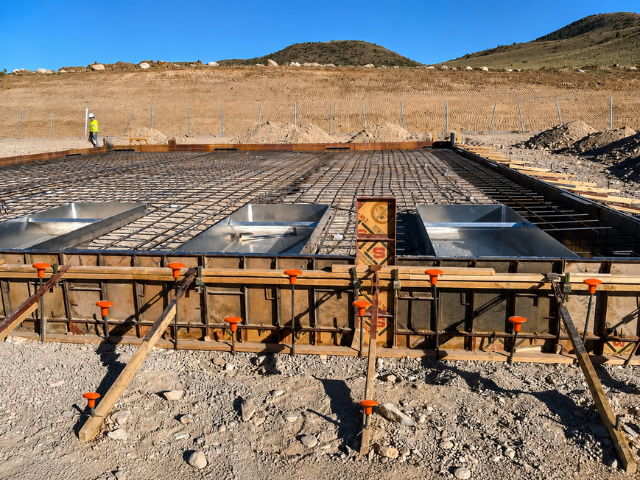
After the site is prepared, forms are installed to shape the concrete foundation. These forms create the exact dimensions needed for transformer pads, breaker pads, and equipment structures.
Reinforcement materials are then added. Steel rebar grids and reinforcement cages increase strength and help reduce cracking.
This reinforcement allows the concrete to support the heavy loads created by transformers, breakers, and structural systems.
The concrete pouring stage requires coordination and precision. Concrete must be placed evenly throughout the forms and vibrated to remove trapped air pockets.
U'Crew crews work carefully during this process to ensure the mixture fills every section properly.
The surface is then leveled and finished so equipment can be mounted accurately. In substation construction, even small alignment differences can affect equipment installation.
After pouring is complete, the curing process begins.
Concrete gains strength as it cures. During this stage, moisture and temperature must be managed carefully so the material hardens correctly.
Different project environments create different curing challenges. Heat, freezing temperatures, wind, and changing weather conditions can all affect the process.
Crews monitor the curing stage closely to ensure the concrete develops the strength needed for long term performance.
Proper curing helps substation concrete foundations resist cracking, shifting, and structural stress over time.
Substations contain equipment that operates continuously and often carries significant weight. Transformers, breakers, and structural supports must remain stable for many years.
Substation concrete foundations are designed to support several types of utility equipment.
Large transformers are among the heaviest components in a substation. These units regulate voltage and move electricity through the grid.
Their foundations must support both weight and vibration while maintaining proper alignment.
Reinforced concrete helps distribute these loads evenly across the ground and provides long term stability.
Substations also include smaller structures such as control buildings, relay cabinets, and switchgear units.
These structures require carefully built concrete pads that remain level and secure over time.
Even small shifts in the foundation can affect wiring systems and equipment alignment.
Concrete foundations provide the steady base needed for these systems to operate safely.
Substation construction requires strict safety procedures. Utility projects often involve high voltage systems and specialized construction environments.
U'Crew crews follow project guidelines and safety standards while working on utility sites. Coordination with engineers, utility providers, and project managers helps ensure the work meets specifications.
Because substations support large communities and critical infrastructure, accuracy and safety remain important throughout every stage of construction.
Substation foundations must withstand changing environmental conditions for decades. Heat, moisture, freezing temperatures, and heavy equipment all place stress on the structure.
Reinforcement, proper curing, site preparation, and drainage planning all contribute to long term durability.
Water management is especially important. Proper drainage helps prevent water from collecting around equipment pads and weakening the soil beneath the structure.
When these details are handled correctly, substation concrete foundations continue supporting utility systems for many years.
Imagine a new electrical substation being built to support a growing commercial and residential area. Before electrical equipment arrives, construction crews must first prepare the site infrastructure.
U'Crew crews begin by grading and compacting the site. Forms are installed for transformer pads, breaker pads, and support structures. Reinforcement steel is placed throughout the foundations.
Concrete is poured carefully and finished to maintain proper alignment. After curing is complete, utility crews install transformers, breakers, and electrical systems.
Once operational, the substation begins supporting homes, businesses, industrial facilities, and infrastructure throughout the surrounding area.
Most people never see the concrete foundations beneath an electrical substation. The equipment above ground receives most of the attention, while the concrete base quietly supports the entire system.
Yet these foundations are essential to modern power infrastructure.
Substation concrete foundations help support the transformers, breakers, and electrical systems that move electricity across the grid every day.
Across the nation, strong concrete foundations help keep power systems stable, reliable, and ready to support the growing demands of modern infrastructure.